Overcoming Black Lichen Spots on Concrete Patio Slabs
Black spots on a concrete patio are one of the most common complaints among homeowners across Western Sydney. Whether you live in Penrith, Blacktown, Parramatta, Liverpool, Campbelltown or the Hills District, the combination of shaded outdoor areas, seasonal humidity and porous concrete creates ideal conditions for lichen, algae and mould. This guide explains what those dark patches actually are, why they appear, and how to remove them safely and keep them from returning.
What Are Those Black Spots on Your Concrete?
Not every dark patch on concrete is lichen. Correct identification matters because the treatment differs slightly depending on the cause. The most common culprits on patio slabs include:
- Black lichen: A composite organism made up of a fungus and an alga living together. It forms flat, crusty or leathery spots that cling tightly to the surface and are often round in shape.
- Black algae (cyanobacteria): Appears as dark streaks or stains, often in damp or shaded zones. It feels slimy when wet.
- Mould and mildew: Typically grows in a fuzzy or speckled pattern, especially under pergolas, near downpipes or beneath outdoor furniture.
- Organic staining: Leaf tannins, fallen fruit and soil can leave dark marks that resemble lichen but wash away more easily.
A simple test is to scrub a small area with a stiff brush and water. If the spot lifts easily, it is probably surface dirt or mould. If it remains firmly attached and leaves a stain, lichen or deeply embedded algae is likely.
Why Lichen Thrives on Western Sydney Patios
Western Sydney has hot https://laneodbb024.northvaledigest.com/posts/top-7-pressure-cleaning-mistakes-most-homeowners-make summers, but it also experiences cooler, damp winter mornings, heavy summer storms and pockets of persistent shade. Several local factors contribute to lichen growth:
Porous Concrete Surfaces
Standard broom-finished or exposed-aggregate concrete has a naturally rough, porous texture. Microscopic pores hold moisture and trap spores, giving lichen a place to anchor. Older slabs with worn sealers or no sealer at all are especially vulnerable.
Shade and Poor Airflow
Patios beneath pergolas, covered alfresco areas, dense trees or along south-facing fences stay damp longer. Reduced sunlight and limited airflow slow evaporation, which encourages growth.
Poor Drainage
Slabs with insufficient fall, blocked drains or water pooling near garden beds stay wet for extended periods. Many Western Sydney suburbs have clay-heavy soils that drain slowly, which can add to moisture around patio edges.
Organic Debris
Leaves, pollen, soil and potting mix provide nutrients. Gardens with jacarandas, eucalypts, figs and similar trees often deposit debris that feeds lichen and algae.
Safety and Preparation Before You Start
Before treating your patio, take a few precautions to protect yourself, your plants and the surrounding environment.

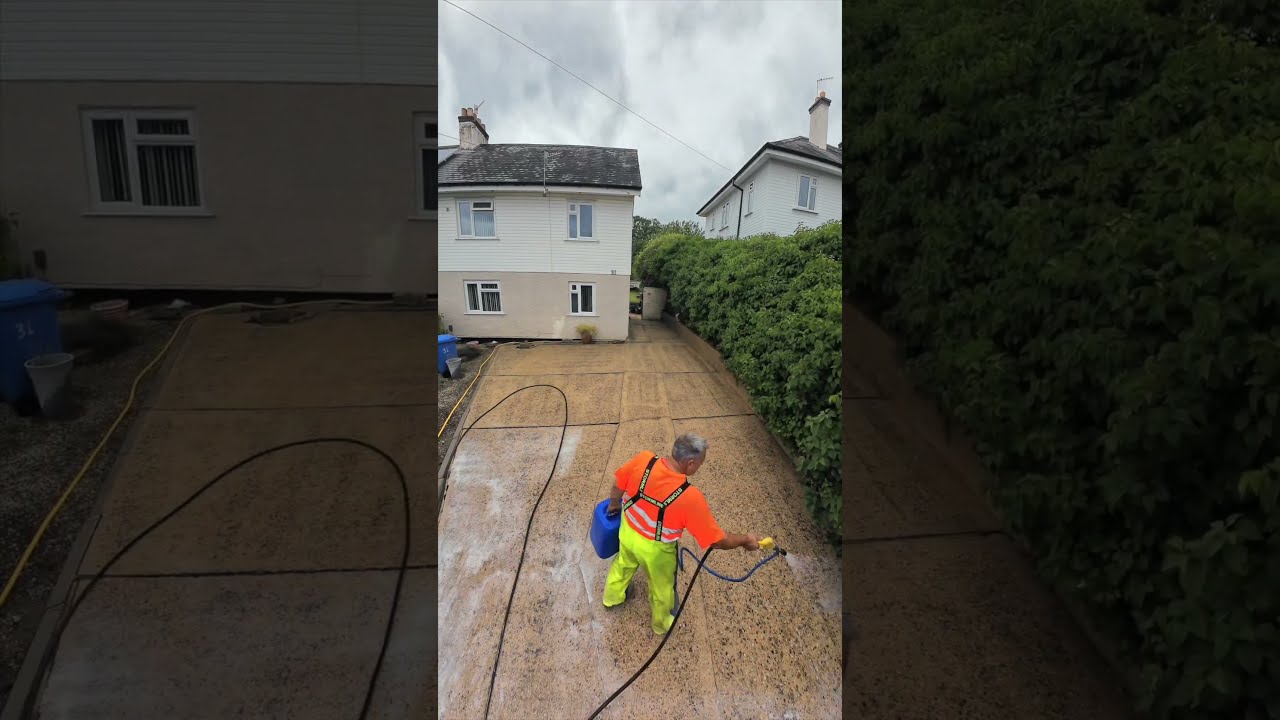
- Wear waterproof gloves, safety glasses and closed footwear when handling any cleaning product.
- Move outdoor furniture, pots and mats off the slab.
- Pre-wet nearby plants and lawn to dilute any runoff, and consider covering delicate plants.
- Check the weather. Choose a mild, dry day with no rain forecast for at least 24 hours, and avoid applying products in direct midday heat, which causes them to dry before they can work.
- Prevent runoff entering stormwater drains where possible. In NSW, allowing chemical-laden wash water to enter stormwater can breach environmental protection rules, so direct water onto garden beds or lawn only when using diluted, plant-safe products.
How to Remove Black Lichen Spots from Concrete
Lichen is more stubborn than ordinary mould because it bonds to the surface. Most successful removal involves a combination of a suitable cleaner, dwell time and gentle mechanical agitation. Follow these steps for a methodical approach.
- Sweep and rinse. Remove loose debris, leaves and dirt with a stiff broom, then wet the slab with a garden hose.
- Apply a suitable treatment. Use a purpose-made lichen and mould remover, or a diluted sodium hypochlorite (pool-grade or household bleach) solution following the product directions. Many commercial concrete cleaners available from Australian hardware stores are designed for this purpose. Apply evenly with a low-pressure sprayer or watering can.
- Allow dwell time. Leave the product on the surface for the period specified on the label, typically 10 to 30 minutes. Do not let it dry out; mist with water if necessary.
- Agitate with a stiff brush. Use a nylon-bristle broom or deck brush to scrub affected areas. Avoid wire brushes, as they can scar the concrete and leave rust marks.
- Rinse thoroughly. Wash away all residue with clean water.
- Repeat if needed. Established lichen may require a second treatment, and some stains fade gradually over several days as the organism dies off.
Using a Pressure Washer
High-pressure cleaning is effective, but it must be used with care. Excessive pressure or a narrow, zero-degree nozzle can etch the surface, strip the cement paste, and expose aggregate, making the slab rougher and more prone to future growth. A wide fan tip held at a consistent distance and a pressure around 2,000 to 3,000 PSI is generally suitable for plain concrete. Always test a small, inconspicuous area first. Pressure washing works best after a chemical treatment has loosened the lichen, rather than as a standalone solution.
Natural and Low-Chemical Options
Some homeowners prefer gentler alternatives, particularly where pets, children or edible gardens are nearby. Options include white vinegar solutions, oxygen-based (sodium percarbonate) cleaners and specialised biodegradable concrete cleaners. These generally work more slowly and may require repeated application, but they are less likely to harm surrounding vegetation. Be aware that vinegar is acidic and can dull or etch concrete with repeated use, so it is best used sparingly and rinsed well.
What to Avoid
Certain common approaches can cause more harm than good:
- Mixing chemicals: Never combine bleach with ammonia, vinegar or acidic cleaners. This can release toxic gases.
- Using strong acids without expertise: Hydrochloric (muriatic) acid can damage concrete and harm plants and waterways if handled incorrectly.
- Over-scrubbing coloured or sealed concrete: Aggressive methods can remove pigment or sealer and leave patchy areas.
- Letting runoff reach drains or creeks: Western Sydney's waterways, including those feeding the Hawkesbury-Nepean system, are sensitive to chemical pollution.
Preventing Lichen from Coming Back
Removing lichen is only half the job. Without addressing the conditions that allowed it to grow, spots can return within months. Effective prevention focuses on reducing moisture, limiting nutrients and protecting the concrete surface.
Improve Sunlight and Airflow
Prune overhanging branches and trim dense shrubs near the patio edge. Even a modest increase in sunlight can noticeably reduce moisture retention. Where a pergola is the source of shade, consider louvred or partially open roofing that allows better air movement.
Fix Drainage Problems
Check that the slab slopes slightly away from the house and that grates and downpipes are clear. If water regularly pools, a licensed landscaper or concreter can assess whether additional drainage, such as a channel drain or agricultural pipe, is warranted.
Seal the Concrete
Applying a quality penetrating or acrylic concrete sealer reduces porosity and makes it harder for spores to take hold. Reapply according to the manufacturer's guidance, which is often every two to five years depending on the product and foot traffic. Choose a sealer with an appropriate slip rating for outdoor use, as some glossy finishes can become slippery when wet.
Establish a Routine Cleaning Schedule
Sweep the patio regularly and rinse off leaf litter and soil. A light preventative treatment with a mould-inhibiting cleaner once or twice a year, particularly after the cooler, wetter months, helps stop growth before it becomes visible.
Slip Hazards and Structural Considerations
Lichen, algae and mould are not just cosmetic issues. Damp biological growth can make surfaces dangerously slippery, which is a genuine risk for older residents and young children. If you notice cracking, spalling, crumbling surfaces or persistent moisture despite cleaning, the slab may have deeper issues such as poor-quality concrete, water ingress or subsidence. In those cases, an inspection by a qualified concreter is a sensible next step.
When to Call a Professional
DIY methods are suitable for most small to medium patios, but professional help may be worthwhile when:
- The affected area is large or spans multiple outdoor zones.
- The concrete is stamped, coloured, exposed-aggregate or otherwise delicate.
- Staining persists after several treatments.
- Access is difficult, or the patio is part of a multi-level or elevated structure.
- You want a long-lasting sealed finish applied after cleaning.
Local exterior cleaning and concrete specialists in Western Sydney understand how regional conditions affect surfaces and can recommend treatments suited to your slab type. When choosing a provider, ask about the products they use, how they manage wastewater, and whether they carry appropriate public liability insurance.
Final Thoughts
Black lichen spots on concrete patio slabs are a manageable problem when approached correctly. Identify the growth, choose a treatment suited to your surface, clean with care, and then address the underlying causes of moisture and shade. With regular maintenance, sound drainage and a good sealer, your outdoor area can stay clean, safe and inviting throughout the year, whatever the Western Sydney climate delivers.
Western Sydney Pressure Cleaning
Unit 2/1 Cowpasture Pl, Wetherill Park NSW 2164
(02) 9000 1596